
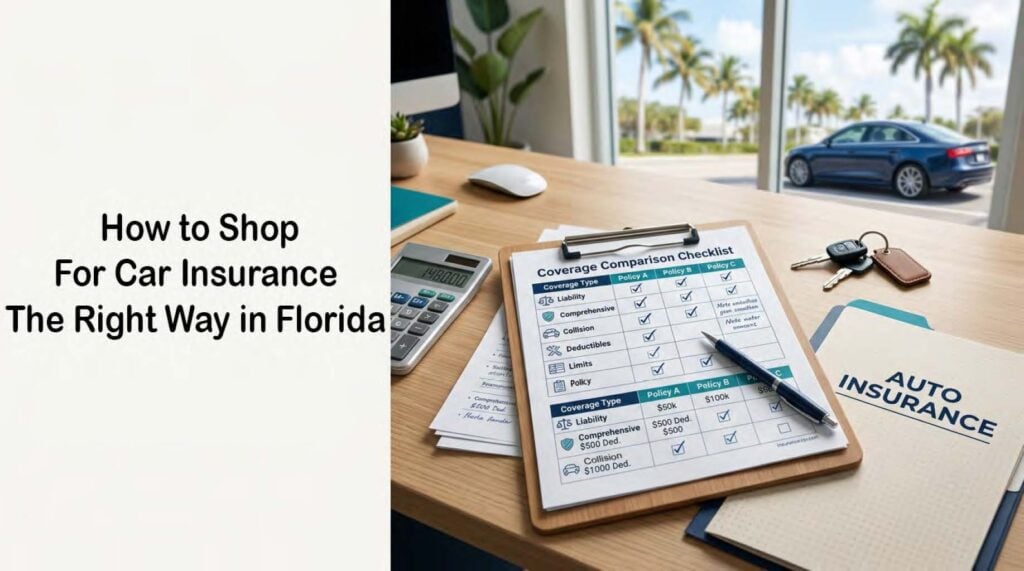
Shopping for car insurance in Florida is about more than finding the cheapest price. The right policy comes down to five decisions: How much liability coverage do you actually need? Should you stack your uninsured motorist coverage? What deductibles make sense for your car? Do you need rental coverage? And which endorsements are worth adding? Get these right, and you’re protected. Get them wrong, and a single accident can cost you far more than you ever saved on premiums.
What Liability Limits Should You Actually Have?
Florida law requires a minimum of $10,000 in personal injury protection (PIP) and $10,000 in property damage liability. But those minimums are dangerously low. The Florida Department of Financial Services recommends that most drivers carry significantly more than the state minimum — and most insurance professionals agree.
If you cause an accident and injure someone, you are personally responsible for damages above your policy limit. Medical bills from a serious accident can reach $100,000 or more. If your policy only covers $10,000, the rest can come out of your savings, your home equity, or your wages.
A good rule of thumb: carry at least $100,000 per person and $300,000 per accident in bodily injury liability — often written as 100/300. If you have significant assets, consider 250,000/500,000 limits and umbrella insurance after that for an extra layer of protection.
When comparing policies, don’t just compare prices at the same minimum limits. Compare what you actually get for the dollar. A policy with $100,000/$300,000 limits from a competitive carrier often costs far less than most people expect.
What Is Uninsured Motorist Coverage — and When Should You Stack It?
Uninsured motorist (UM) and underinsured motorist (UIM) coverage protects you when the other driver has no insurance or not enough to cover your injuries. In Florida, where roughly one in four drivers is uninsured, this coverage is one of the most important things you can add to your policy.
Stacking means multiplying your UM/UIM limits by the number of vehicles on your policy. If you have two cars insured with $50,000 in UM coverage each, stacked coverage gives you up to $100,000 per accident. Non-stacked coverage caps you at $50,000 no matter how many cars you insure.
Stacked UM costs more than non-stacked — but the difference is often smaller than people expect. When it’s affordable, stacking is almost always the better choice. One bad accident with an uninsured driver can easily exceed a single vehicle’s UM limit. Stacking closes that gap.
Ask each insurer: What does stacked versus non-stacked UM cost on my specific policy? For most South Florida drivers, the added protection is well worth the difference in premium.
How Should You Choose Your Comprehensive and Collision Deductibles?
Your comprehensive and collision deductibles are the amounts you pay out of pocket before your insurer covers a repair or replacement. Common options range from $250 to $2,500. Choosing the right number depends on two things: the value of your car and how much you could comfortably pay after an accident.
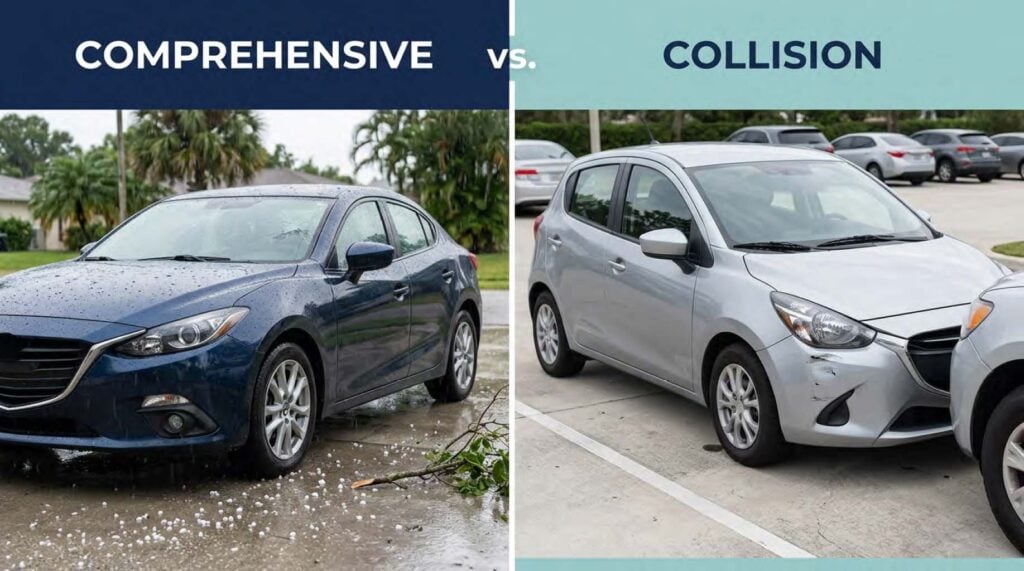
Collision coverage pays for damage when your car hits another car or object. Comprehensive coverage covers theft, weather damage, falling objects, and other non-collision events — including hurricane and hail damage, which matters a great deal in South Florida.
A higher deductible lowers your monthly premium. A lower deductible costs more each month but reduces your out-of-pocket expense after a claim. If your car is worth less than $5,000, ask whether carrying collision and comprehensive is even cost-effective. If it’s worth significantly more, a lower deductible often makes sense.
One common mistake: choosing a $2,500 deductible to save $20 a month, then finding out you can’t cover the deductible when you need to file a claim. Choose a deductible you can actually pay without hardship.
Do You Need Rental Car Coverage on Your Policy?
Rental car coverage pays for a rental vehicle while your car is being repaired after a covered claim. It typically costs $5–$7 per month and covers a set daily amount — often $30–$50 per day — for a defined number of days.
If you have access to another car or reliable alternatives while yours is in the shop, you may not need this coverage. But if your car is your only transportation, a week or more without it can be a real hardship. Repairs after a collision can take longer than most people expect, especially if parts are delayed.
Also worth knowing: rental coverage from your auto policy only applies when your car is being repaired after a covered loss. It does not cover rental cars you rent for travel. For that, you’d need coverage from a travel card or a separate rental policy.
What Roadside Assistance and Endorsements Are Worth Adding?
Beyond the core coverages, several endorsements can fill important gaps — and most cost very little when bundled into your policy.
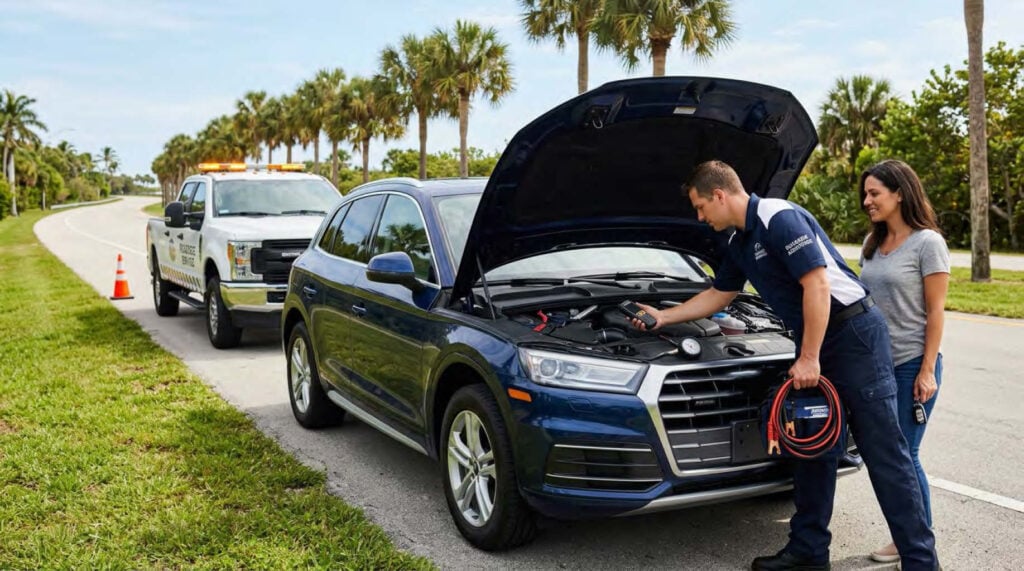
- Roadside assistance: Covers towing, flat tire changes, battery jumps, and lockout service. If you don’t have AAA or a comparable plan, this is usually worth adding for a few dollars a month.
- Gap coverage: If you financed or leased your car, gap coverage pays the difference between what your car is worth and what you still owe if it’s totaled. New cars depreciate quickly — without gap coverage, you could owe thousands more than the insurance payout.
- New car replacement: Some policies offer to replace a totaled new car with a brand-new equivalent rather than paying actual cash value. Worth asking about if your car is less than a year or two old.
- Accident forgiveness: Prevents your first at-fault accident from raising your premium. Not every carrier offers it, but if it’s available, it can save you significantly over time.
An independent agent can compare what each carrier includes and at what price — so you’re not paying for duplicates or missing something important.
Frequently Asked Questions
What are the minimum car insurance requirements in Florida?
Florida requires $10,000 in personal injury protection (PIP) and $10,000 in property damage liability. These minimums are very low and leave most drivers significantly underinsured. Most insurance professionals recommend at least $100,000/$300,000 in bodily injury liability for real financial protection.
What does it mean to stack uninsured motorist coverage in Florida?
Stacking multiplies your uninsured motorist (UM) limits by the number of vehicles on your policy. If you have two cars with $50,000 in UM coverage each, stacking gives you up to $100,000 per accident instead of $50,000. Florida allows stacking, and when the added cost is affordable, it’s usually the better choice — especially given how many uninsured drivers are on Florida roads.
Should I carry comprehensive and collision coverage on an older car?
It depends on the car’s value and your deductible. If your car is worth $4,000 and your deductible is $1,500, your maximum payout after a total loss would be around $2,500 — which may not justify the added premium. A good rule is to drop collision and comprehensive when the annual cost exceeds 10% of the car’s actual cash value.
How much does it cost to add roadside assistance to a car insurance policy in Florida?
Roadside assistance typically adds $2–$5 per month per vehicle to your auto insurance policy in Florida. It’s one of the most affordable endorsements available, and it covers towing, flat tires, battery jumps, fuel delivery, and lockouts. If you don’t have a separate roadside plan like AAA, it’s usually worth adding.
What is gap insurance and do I need it in Florida?
Gap insurance pays the difference between your car’s actual cash value and the amount you still owe on your loan or lease if the car is totaled. Cars depreciate quickly — especially in the first year or two — which means many drivers owe more than their car is worth. If you financed or leased your vehicle, gap coverage is worth serious consideration.
Can Cronin Insurance help me compare car insurance options in Boca Raton?
Yes. Cronin Insurance is an independent agency that works with 10+ auto insurance carriers in Florida. We compare policies side by side on coverage and price. Visit our car insurance page or call us to get started.
Get the Right Coverage at the Right Price
An independent agent compares options across multiple carriers — not just on price, but on what each policy actually covers. Cronin Insurance has served South Florida drivers for over 30 years.
📞 Call: (561) 479-1898 | 💬 Text: (561) 475-5606 | 🌐 cronininsurance.com/car-insurance
Low rates, choice of companies, and personal advice from local agents. When it comes to shopping for car insurance in Florida,
Cronin Insurance is the Wise Choice.